
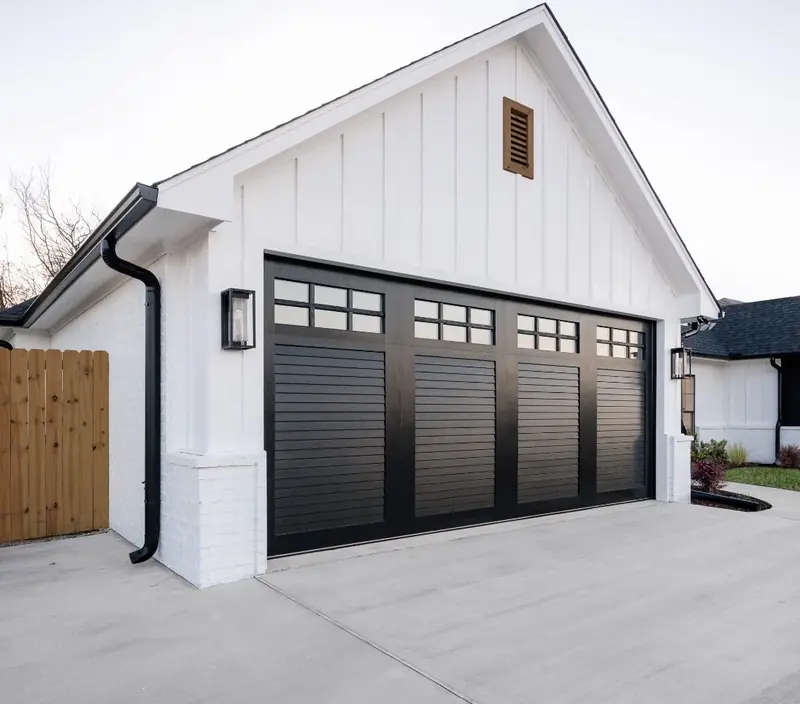
Up north, people buy insulated garage doors to keep the cold out. In South Florida, the enemy is the sun. A west-facing garage door in Coral Springs or Wellington can bake all afternoon, and a thin, uninsulated steel door passes that heat straight into the garage. If you use your garage as a workshop, a gym, a laundry room, or storage for anything that does not like heat, or if a bedroom sits over the garage, an insulated door is one of the most practical upgrades you can make. Here is what insulation actually does, what the numbers mean, and when it is worth the extra cost.
What an insulated garage door is
A basic steel garage door is a single sheet of steel with nothing behind it. An insulated door adds a layer of foam insulation to the inside of each panel, and the better ones sandwich that foam between two layers of steel, with the foam bonded to both.
There are two common types of foam:
Polystyrene. Rigid foam boards fitted into the back of each panel. It adds some heat resistance and makes the door quieter.
Polyurethane. Foam that is injected between two steel skins, where it expands and bonds to them. It fills every gap, resists heat better per inch, and makes the whole panel stiffer. Most premium insulated doors use polyurethane.
What R-value means
Insulation is rated by R-value, a measure of how well a material resists heat moving through it. According to the U.S. Department of Energy, the higher the R-value, the better the insulation works.
A bare steel door has almost no R-value. Insulated doors range widely depending on the foam and the thickness of the panel. When you compare doors, ask for the rated R-value of the door itself, not just the foam, and remember that a door is only as good as its weather seals. A high-R-value door with gaps at the bottom and sides will still let hot, humid air pour in.
Why insulation matters more in South Florida than people think
Heat. The sun beating on a dark or west-facing door turns the door into a radiator. Insulation slows that heat from reaching the garage. That keeps the space more usable, and it protects things stored there, like paint, electronics, a spare refrigerator, or a second car.
The rooms next to the garage. In many homes, the garage shares a wall with the kitchen or laundry, or sits under a bedroom or bonus room. A hot garage makes those rooms harder to cool. Insulating the door will not turn the garage into air-conditioned space, but it reduces how much heat the house has to fight next to it.
Humidity. Warm, humid air meeting cooler surfaces is how condensation and mildew start. A well-sealed, insulated door helps keep the garage's temperature more stable, which cuts down on those swings.
Noise. Foam-filled panels are much quieter. They do not rattle and boom the way a single sheet of steel does, which is a real difference if someone sleeps above the garage.
Strength. This is the benefit most people do not expect. A double-skin door with bonded polyurethane is stiffer and more dent-resistant than a single sheet of steel. That stiffness helps with daily bumps from bikes, balls, and car doors. For storm protection, though, what counts is the door's wind and impact rating, not the insulation. Our article on hurricane-rated garage doors in Broward and Palm Beach County explains what the code requires.
When an insulated door is worth it
An insulated door is usually a smart choice when:
- The garage is attached to the house, especially with living space above or beside it
- The door faces south or west and gets hard afternoon sun
- You use the garage for anything besides parking: a workshop, gym, laundry, or home office
- You store heat-sensitive items like paint, electronics, wine, or a second refrigerator
- Noise from the door bothers anyone in the house
It matters less for a detached garage or carport used only for parking, where a non-insulated door can be a reasonable way to save money.
What to watch for
Weight. Insulated doors are heavier. That means the springs must be sized for the new door, and the opener needs enough power to move it. Moving to an insulated door with the old springs and a small 1/2 HP opener is asking for early failures. Our garage door opener guide covers opener sizing in detail.
Seals. The bottom seal, side and top weatherstripping, and the seals between panels all do real work. Worn, cracked seals let heat and humidity back in no matter what the panels are rated. If your door is in good shape but the seals are shot, replacing them is a quick, low-cost improvement.
Color. Lighter colors reflect more sunlight. If you are choosing a new insulated door, a lighter finish on a sunny side of the house adds to the benefit.
Code. Any new door in Broward or Palm Beach County still has to meet the Florida Building Code for wind, and in Broward, for impact. Insulation does not replace that rating, and a new door usually requires a permit. A licensed installer handles both.
Getting the most from an insulated door
A new insulated door does its best work when the rest of the garage cooperates. A few simple habits make a real difference:
- Keep the door closed in the afternoon. An open door on a sunny side lets in more heat in ten minutes than the panels keep out all day.
- Check the seals once a year. Look for daylight around the edges and cracks in the bottom seal, especially before summer.
- Rinse the door a few times a year. Salt and grime break down the finish on the outer steel skin, which protects the panels underneath.
- Keep the door balanced. A heavier insulated door that drifts or slams tells you the springs need attention. Balance problems wear out the opener, too.
Frequently asked questions
Do insulated garage doors help in Florida? Yes. They slow the sun's heat from reaching the garage, which keeps the space cooler and reduces heat next to living areas. They also make the door quieter and stiffer.
What is a good R-value for a garage door? Higher is better. Compare the rated R-value of the whole door, and make sure the weather seals are in good shape, since gaps undo much of the benefit.
Is polyurethane or polystyrene better? Polyurethane usually insulates better per inch and bonds to the steel skins, making a stiffer, more dent-resistant panel.
Does an insulated door make my garage door hurricane-proof? No. Storm protection comes from the door's wind and impact rating under the Florida Building Code, not from insulation.
The bottom line
If your garage is attached, sunny, or used for anything more than parking, an insulated door is worth serious consideration in South Florida. You get a cooler, quieter, more usable garage, a stiffer door, and less heat pushing into the rooms next to it.
Ultra Garage Doors has installed insulated steel doors across Broward and Palm Beach County since 2007, and we size the springs and opener to match every door we install. Call 561-494-4070 or schedule a free in-home consultation to compare insulated door options for your home. See our new garage door installation services.