
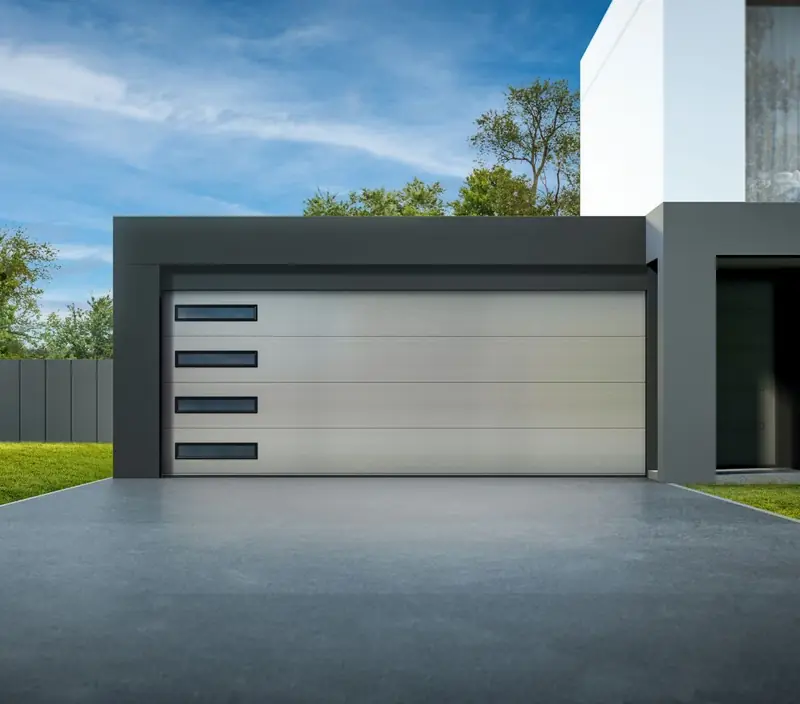
"What is the strongest garage door?" sounds like a simple question. In South Florida it has two different answers. One is about dents, dings, and daily wear. The other is about whether the door stays in its opening when a hurricane throws hurricane-force gusts and flying debris at it. The material matters for the first. The second depends on the door's tested wind and impact rating, and any material can fail if the door is not built and installed to that rating. Here is how the common options compare for homes in Broward and Palm Beach County.
First, what "strong" really means here
When a door is approved for use in Florida, it is tested and rated as a complete system: the panels, the reinforcing struts, the tracks, the hinges, and the anchors that tie it to your house. That rating tells you how much wind pressure the door can take and, for impact-rated doors, whether it can survive being hit by debris. Broward County requires new garage doors to be impact-rated. In Palm Beach County, the door must be rated for the wind pressure at your address, and any glass in it must be impact-rated. Our article on hurricane-rated garage doors in Broward and Palm Beach County breaks that down.
So a steel door and an aluminum-and-glass door can both be storm-rated. The difference between them shows up in how they handle everything else: heat, salt air, dents, maintenance, and looks.
Steel: the everyday workhorse
Steel is the most common garage door material in South Florida, and for good reason. It is strong, widely available in wind- and impact-rated versions, and comes in more styles than any other material, from flush modern panels to carriage-house designs.
Not all steel doors are equal. Steel thickness is measured in gauge, and a lower gauge number means thicker steel. A thin, single-layer steel door will dent easily. A door with two steel skins and a bonded foam core is much stiffer and more dent-resistant, and it adds insulation at the same time. For most homeowners asking "which door is strongest?", a heavier-gauge, double-skin, insulated steel door is the practical answer. We cover the insulation side in Are Insulated Garage Doors Worth It in South Florida?
The weakness of steel is rust. Scratches and chips in the finish let moisture reach bare metal, and near the coast, salt speeds that up. Rinsing the door a few times a year and touching up chips quickly goes a long way. Our garage door rust prevention article has the details.
Best for: most homes, especially anyone who wants the widest choice of styles, strong dent resistance, and insulation.
Aluminum and glass: the modern look
Full-view doors, with aluminum frames and large glass panels, have become one of the most requested styles on newer and renovated homes across South Florida. They let in natural light and suit modern and coastal architecture.
Aluminum does not rust the way steel does, which is a real advantage in salty air, though it can still corrode and its finish still needs care. It is lighter than steel, which is easier on springs and openers. The tradeoff is that aluminum dents more easily than heavier steel.
The big question with glass is the storm rating. In both Broward and Palm Beach County, glass in a garage door must be impact-rated, which means laminated impact glass in a frame tested as a system. Impact-rated full-view doors cost more than standard ones, but they give you the look without giving up protection. Also think about privacy and heat. Frosted or tinted glass helps with both, since a sunny glass door can heat up a garage quickly.
Best for: modern and coastal homes where light and style matter, with an impact rating where required.
Fiberglass: salt-air resistant, with limits
Fiberglass doors are made of fiberglass skins over a frame, often with a foam core, and are sometimes molded to look like wood. Because fiberglass does not rust, it holds up well in salty coastal air, and it does not dent the way thin metal does.
The tradeoffs are that fiberglass can crack under a sharp impact, it can fade in strong sun over time, and there are fewer wind- and impact-rated fiberglass options than steel. If you are interested in fiberglass, ask whether a wind- and impact-rated fiberglass model is available for your opening before you settle on a design.
Best for: homeowners close to the water who want a wood look without wood's maintenance, if a rated model fits the opening.
Wood: beautiful, but hard work here
Real wood doors look great, but South Florida is tough on them. Humidity, heavy rain, and sun lead to swelling, warping, and fading, and wood needs regular sealing or painting to stay sound. Wood doors are also heavy, and finding one rated for local wind codes limits your options.
For most homeowners who love the wood look, a steel carriage-style door with a wood-grain finish, or a fiberglass door, gets the style with far less upkeep.
Quick comparison
| Material | Dent resistance | Salt-air resistance | Maintenance | Insulation options | Style range |
|---|---|---|---|---|---|
| Steel (double-skin, insulated) | High | Good if the finish is kept up | Low | Excellent | Widest |
| Aluminum and glass | Moderate | Very good | Low to moderate | Limited | Modern, full-view |
| Fiberglass | High, but can crack | Very good | Low | Good | Wood-look, moderate |
| Wood | Moderate | Poor in humidity | High | Varies | Custom, traditional |
What makes any door stronger
Whatever material you choose, a few things decide how well the door holds up:
- The rating. Make sure the door has the Florida product approval or Miami-Dade NOA your jurisdiction requires, and keep the paperwork.
- The installation. Rated doors are only rated when installed exactly as tested, with the specified anchors, struts, and track fasteners. That is a job for a licensed installer, usually with a permit.
- The hardware. Springs, cables, rollers, and hinges sized for the door's weight keep it balanced and working for years.
- Maintenance. Regular tune-ups catch loose fasteners, worn rollers, and failing seals before they become problems.
A rated, properly installed door can also help with your insurance. Our article on wind mitigation discounts explains how.
Frequently asked questions
What is the strongest type of garage door? For most homes, a heavy-gauge, double-skin, insulated steel door. For storms, what matters most is the door's tested wind and impact rating and a correct installation.
Are aluminum and glass garage doors safe in hurricanes? They can be, when they are impact-rated with laminated glass and installed as tested. In Broward County, new garage doors must be impact-rated.
Do steel garage doors rust in Florida? They can if the finish is scratched, especially near the coast. Regular rinsing and quick touch-ups prevent most rust.
Are fiberglass garage doors good for coastal homes? Fiberglass resists salt air and dents, but it can crack on sharp impact and has fewer rated models, so confirm a rated option first.
Does a lower gauge mean a stronger steel door? Yes. A lower gauge number means thicker steel, which resists dents better.
So which one should you choose?
For most South Florida homes, a heavy-gauge, double-skin, insulated steel door with the right wind and impact rating is the strongest all-around choice. If you want a modern look and more light, an impact-rated aluminum-and-glass door is an excellent option. Close to the water and want a wood look? Ask about rated fiberglass models.
Ultra Garage Doors installs insulated steel, aluminum-and-glass, carriage, and full-view doors across Broward and Palm Beach County, and has since 2007. Call 561-494-4070 or book a free in-home consultation, and we will walk you through the options that meet code for your address and fit your home. Learn more about new garage door installation.